
JFY2018 GGP “The Project for Procurement of ICU Vital Signs Monitors for Belau National Hospital
2026/3/13
The 5-Year Follow-Up
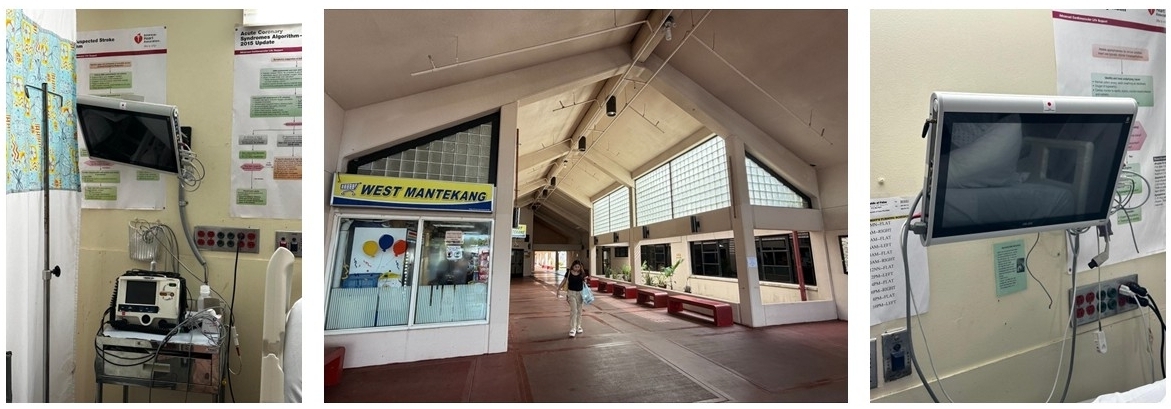
On February 17, 2026, the Grassroots Projects (GGP) Coordinator of the Embassy of Japan visited Belau National Hospital (BNH) and met with Ms. Darnelle Worswick, the Hospital Administrator. The visit was conducted under the five-year follow-up to “The Project for Procurement of ICU Vital Signs Monitors for Belau National Hospital.”
Through the Government of Japan’s GGP, BNH received 10 bedside monitors and 2 central monitors on April 30, 2021, with a total grant of USD 48,700.
Through this project, 10 bedside and 2 central monitors were installed in the medical and surgical ICUs, enabling continuous monitoring. This allows staff to respond quickly in emergencies and improve survival rates, shorten hospital stays, reduce treatment costs, and enhance patient safety and quality of care.
Five years after the monitors were provided, they remain in daily use, allowing staff to continuously observe patients and respond quickly when required. These monitors continue to play an important role in ensuring safe treatment and maintaining high-quality medical care at BNH.
Japan’s GGP was launched in Palau in 1999 to address grassroots development needs, including education, healthcare, and community welfare. This project marks the 77th of the 105 GGP projects implemented in Palau.
The Handover Ceremony
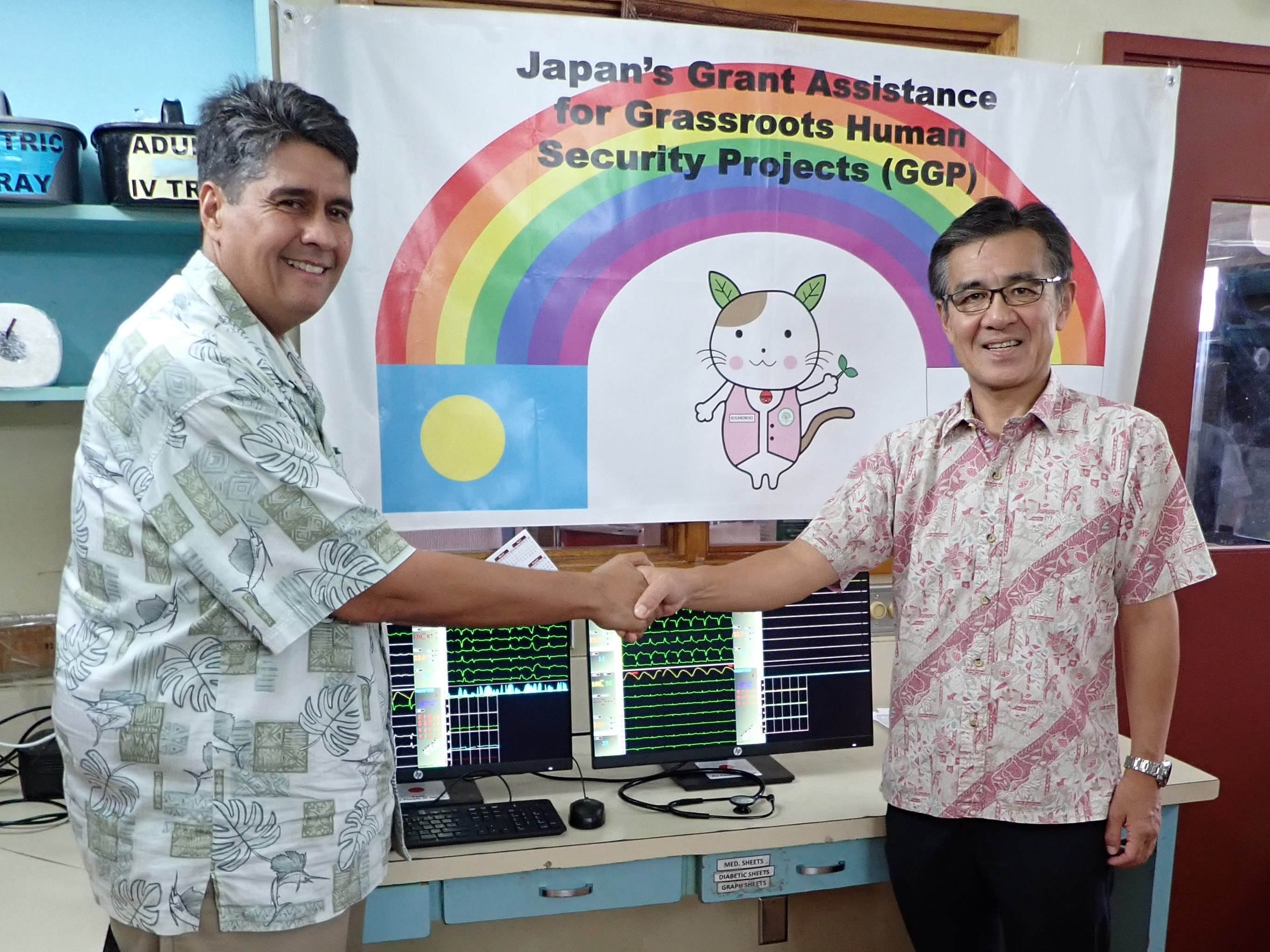
These monitors were purchased in the total cost of $48,700, through Japan’s Grant Assistance for Grassroots Projects (GGP).
Belau National Hospital bears a very important responsibility in the medical field since it is the only public hospital and has inpatients wards / “niuin” facility in this country. However, the vital monitoring equipment and its setup in medical and surgical ICUs are inadequate to treat the patients in a timely manner. Hence, the Embassy of Japan decided to grant vital sign monitors including patient monitors and central stations to Belau National Hospital.
In the ceremony, Ambassador Karasawa stated that this grant would definitely contribute to the early detection of patient deterioration, appropriate diagnosis and treatment and expressed his hope that this project would lead to further development of Belau National Hospital. President Whipps conveyed his appreciation to the Government of Japan for many GGP assistances granted in different fields and was grateful for these projects that save people’s life. Furthermore, he stated that the Government of Palau is looking forward to strengthening hospital functions for residents and visitors working with the Government of Japan including the technical support.
The Government of Japan launched GGP in 1999, for the purpose of responding to various development needs engaged in grassroots activities in Palau. As of May 3, 2021, the Embassy has signed 87 grant contracts with schools and hospitals as well as state governments and non-profit organizations. Education, health care and environment are the primary fields prioritized by Japan in its GGP. For further information about GGP, please contact 488-6455 or visit the Embassy of Japan website at https://www.palau.emb-japan.go.jp/itpr_en/about_ggp.html .
The Signing Ceremony
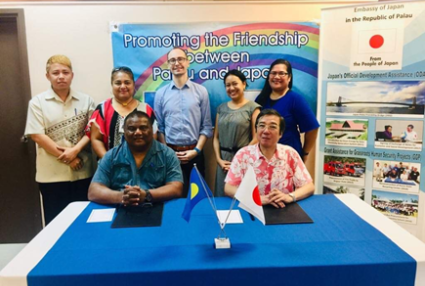
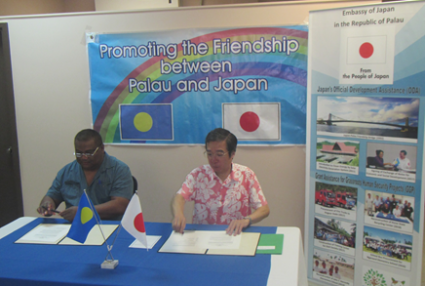
On Wednesday, February 27, 2019, Ambassador of Japan Toshiyuki Yamada and Director Ngirachisau Mekoll from the Bureau of Hospital and Clinical Services of Belau National Hospital (BNH) signed the grant contract for “The Project for Procurement of ICU Vital Signs Monitors for Belau National Hospital,” valued $48,700, under the Japan’s Grant Assistance for Grassroots Projects (GGP). The signing ceremony was held at the Embassy of Japan and witnessed by Director Merur from the Bureau of Nursing and other BNH personnel.
Out of more than 2,000 patients admitted to BNH every year, almost 10% are in critical condition and require ICU monitoring. However, current vitals monitoring equipment and set up in medical and surgical ICUs and step-downs are not adequate enough to treat the patients in a timely manner. There are bedside trolleys which record the patients’ basic vital signs, but these are not sufficiently alarmed or centralized. Therefore, doctors and nurses have to keep looking at the patient and its monitoring screen constantly.
In light of this, the Embassy of Japan decided to grant BNH vital signs monitors including patient monitors and central stations. The new central station will now alarm if there is any abnormalities in the patients’ condition. Furthermore, this will contribute to early detection of patient deterioration, appropriate diagnosis and treatment, and reduction in overall patient mortality and costs of treatment.
In his remarks at the ceremony, Ambassador Yamada expressed his hope that the implementation of this project could improve patient safety in BNH. Director Mekoll expressed deep appreciation for Japan’s assistance and emphasized the importance of granted equipment.
The Government of Japan launched GGP in 1999, for the purpose of responding to various development needs engaged in grassroots activities in Palau. As of February 28, 2019, the Embassy has signed 77 grant contracts with schools and hospitals as well as state governments and non-profit organizations. Education, health care and environment are the primary fields prioritized by Japan for GGP in order to contribute to sustainable development of Palau. For further information about GGP, please contact 488-6455.