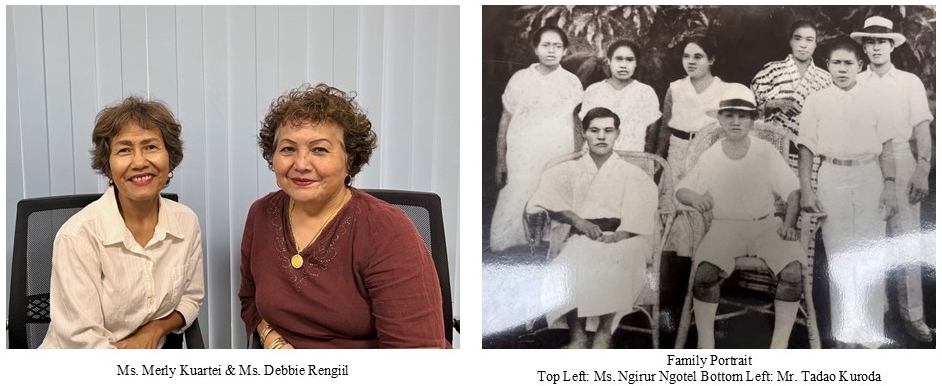
~ “Nikkei” in Palau~ Interview Series: Vol. 40 Ms. Merly Kuartei & Ms. Deborah Rengiil
2026/6/11
Ms. Merly Kuartei
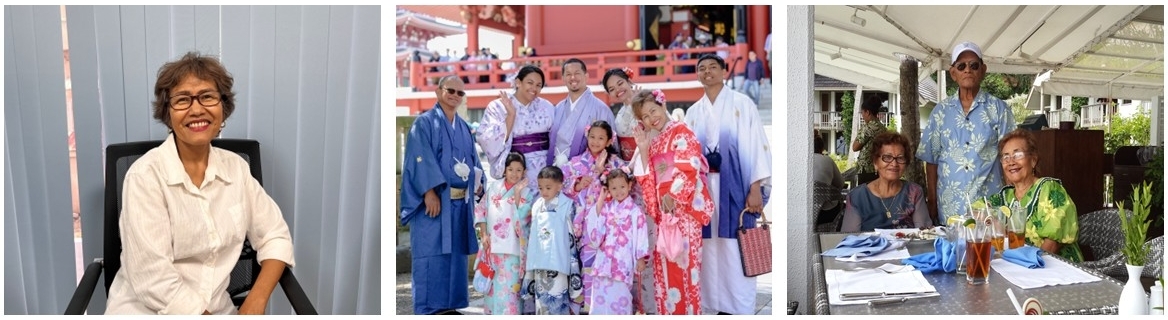
Ms. Merly Kuroda Kuartei, now 68 years old, is a third generation Palauan of Japanese descent. Her father is Mr. Tadao Ngotel and her mother is Ms. Kyoko Higa Ngotel. Both of Ms. Kuartei’s parents are second generation “Nikkei” or Palauans of Japanese descent.
Her paternal grandparents are Mr. Tadao Kuroda, a prominent land surveyor at the time of the Japanese administration from Fukuoka, Japan and a Palauan woman named Ms. Ngirur Ngotel. Together they had seven children. Ms. Merly’s father was born in the year 1930.
He attended a Japanese school for Palauan’s in Ngaraard, then Ngarchelong, and then in Koror in his early years. His career began after high school as the Vice Principal of Ngarchelong Elementary School from 1953 and at the height of his career was the longest-serving politician in the history of Palau. He served as a member of Ngarchelong State Assembly for 26 years and within those 26 years, he served 22 years as a Speaker. He also served as the advisor to the former President Tommy E. Remengesau Jr. from 2016 until passing.
Ms. Merly’s mother is late Mrs. Kyoko Higa Ngotel, a second generation Palauan of Japanese descent. She is the daughter of Mr. Shinji Higa from Okinawa, Japan. Ms. Merly’s mother, Ms. Kyoko originally did not speak any Palauan because her father, Mr. Shinji Higa, wanted his children to speak only Japanese. Though Ms. Kyoko did not speak Palauan, her mother spoke to her in Palauan when teaching her Palauan traditions and life skills such as how to tend the fire. She tried her best to understand even with their language barrier.
After World War II ended, a ship arrived from Japan to repatriate the Japanese people and their families who were living in Palau at the time. As time got closer for the ship’s departure, Ms. Kyoko was nowhere in sight. She had ran away and hid in the forest because she wanted to attend a local dance event later that evening. Because of this, Ms. Kyoko remained in Palau and was looked after by her uncle, Mr. Midar.
Ms. Merly once asked her mother if she ever missed her parents. Her mother said that at that age, she was focused on activities with friends, and she was surrounded by relatives in Palau, so she did not feel her parents’ absence so much.
Ms. Merly recalls that when her mother’s siblings would visit, they would always speak in Japanese, and because she was young and nosy, she would ask her father what they were talking about and why they would not speak in Palauan. Her father would dismiss it and tell her that it was not that interesting and that they were arguing about random things. Her mother’s only living sibling is Ms. Takeko Higa, who was adopted by a younger couple during the war. She is now living in Colorado with her husband and children.
Ms. Merly Kuartei attended Ngarchelong Elementary School before continuing her education at Bethania School for Girls. After graduating from high school, she moved to Seattle, Washington, where she earned her nursing degree from Seattle Pacific University.
She is a registered nurse and currently helps manage a family-owned clinic in Palau with her husband, Senator Dr. Stevenson Kuartei. She also shared that she was able to visit Japan with her family last year.
Ms. Deborah Rengiil
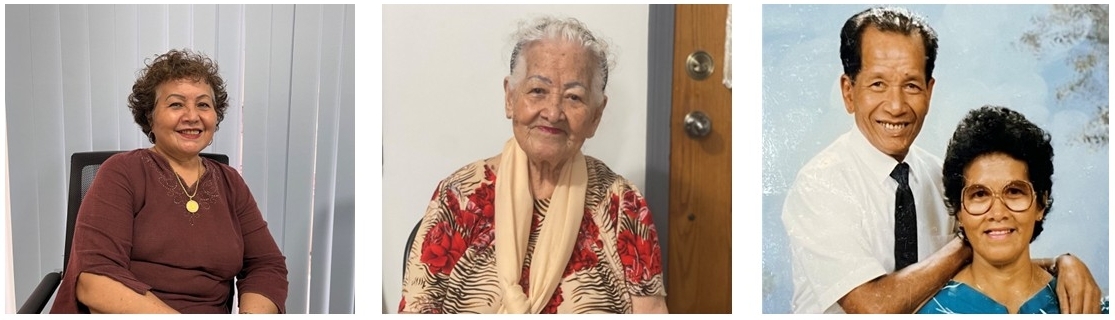
Ms. Deborah“Debbie” Rengiil, now 67 years old, is the daughter of Mr. Yasuhisa“Sisang” Uehara and Ms. Reiko Kuroda Uehara. Both of Ms. Debbie’s parents are second generation “Nikkei” or Palauan’s of Japanese descent. Ms. Debbie’s father is from Okinawa, Japan and her mother Ms. Reiko Uehara, now 97 years old, is the sister of Ms. Merly’s father, Mr. Tadao Ngotel. Their family ancestry traces back to Fukuoka, Japan.
Ms. Debbie’s maternal grandfather, Mr. Hohei Uehara, came to Palau from Okinawa, Japan. He worked in Angaur as a ship captain responsible for bringing Japanese ships into port. He married Ms. Iwong Mengloi Uehara, and together they had six children.
During the repatriation, Ms. Debbie’s grandfather, Mr. Hohei Uehara left to Japan with one of his sons, Mr. Yasuhide Uehara and the rest of his children remained in Palau with their mother. Over the years, Ms. Debbie’s paternal uncle, Mr. Yasuhide Uehara visited Palau several times to search for his Palauan mother and siblings. Ms. Rengiil’s mother and her siblings who stayed back in Palau after World War Two, also traveled to Japan twice in search of their father, but unfortunately, he had passed away the year before their visit. During their visit to Japan, their half-siblings were a bit apprehensive in meeting them, but they soon came to understand that their siblings were there simply to reconnect with family and did not want any of the possessions their father had left behind. Instead, Ms. Debbie’s family invited their relatives in Japan, to visit Palau. .
Ms. Merly and Ms. Debbie’s mothers are best friends. They’re so close that they even match outfits and hairstyles, and at times they’re mistaken for siblings. Ms. Merly and Ms. Debbie excitedly shared photos of their family get-togethers and some of their mothers’ funny stories.
For example, Ms. Reiko Uehara (Ms. Debbie’s mother) often argued with her brother, Mr. Tadao Ngotel (Ms. Merly’s father) but never with Ms. Kyoko Ngotel (Ms. Merly’s mother). On a trip, a flight attendant even mistook the two women, Ms. Reiko Uehara and Ms. Kyoko Ngotel for siblings, and instead of correcting the mistake, they simply went along with it.
Ms. Debbie attended Ngarchelong Elementary School and later went on to Bethania School for Girls. After high school, she pursued a Liberal Arts degree at San Jose Bible College (now Jessup University) in Rocklin, California. Ms. Debbie Rengiil currently works as an office manager for Palau Evangelical Church.
Both women shared their thoughts on the Japan and Palau relations and mentioned that the connection between the two countries is very strong and has existed for many years, even before World War II. Despite its origins during challenging times, they recognize that this connection has evolved into a positive and supportive partnership. At times, it feels like Japan is very close to Palau, almost like family, because many Palauans trace their ancestry back to Japan.