
JFY2013 GGP “The Project for Reconstruction of Meyuns Elementary School”
2026/6/2
The Follow-Up
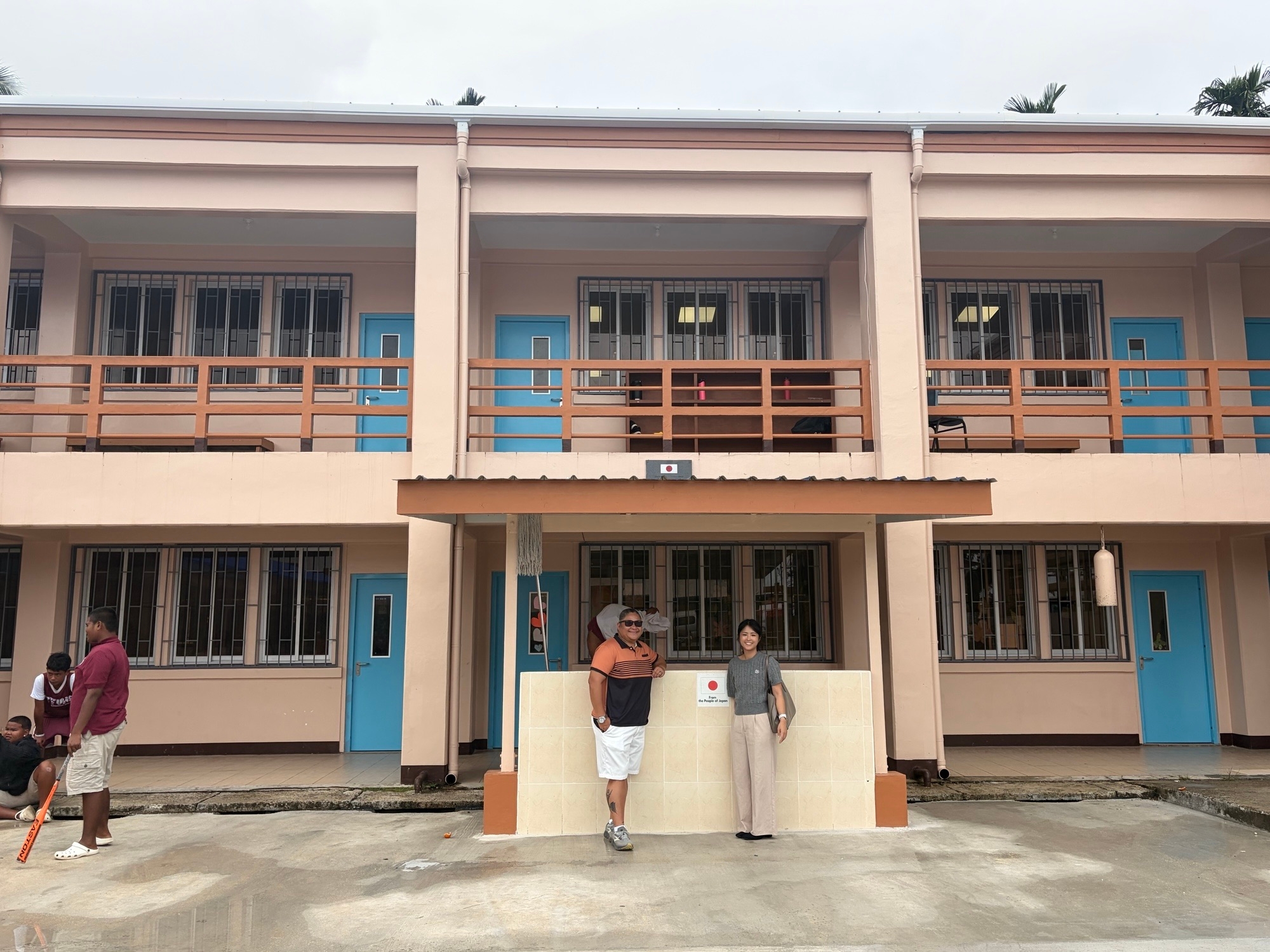
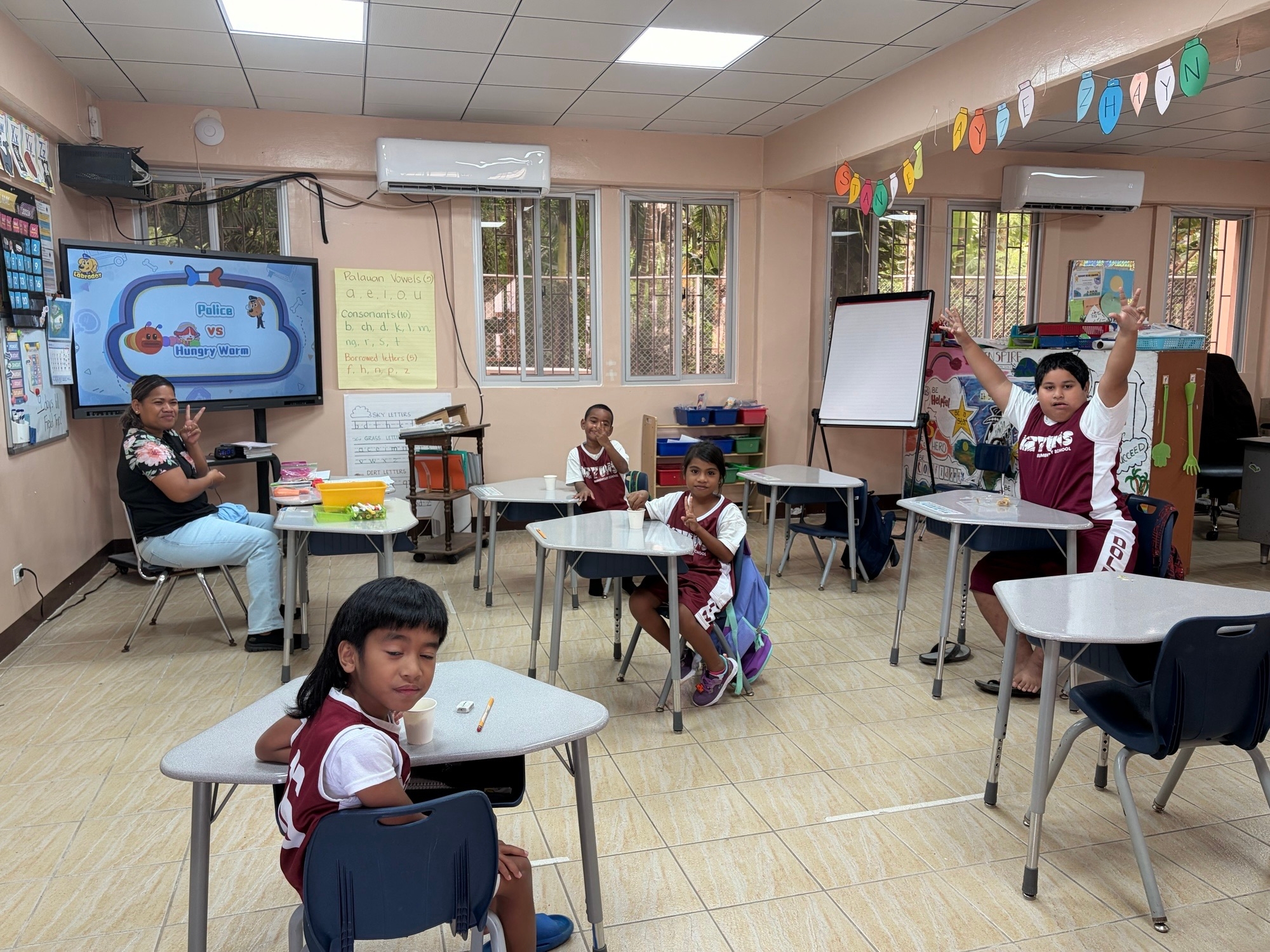
Even 13 years after the completion of the project, the reconstructed school building remains in a good condition providing a safe and comfortable learning environment for all 143 students. The improved classrooms have enabled children to concentrate on their studies in a secure and hygienic setting, supports their healthy development. Such a stable learning environment also helps foster students’ motivation and overall well-being in their daily school lives.
In addition, the facility serves as accommodation for students from outside Koror, including those from Peleliu and Angaur States, during national and international sporting events, making it a facility that benefits the broader community.
The Embassy of Japan hopes that this building will continue to support the students at the MES and contribute to providing a safe and conducive learning environment for many years to come.
The Handover Ceremony
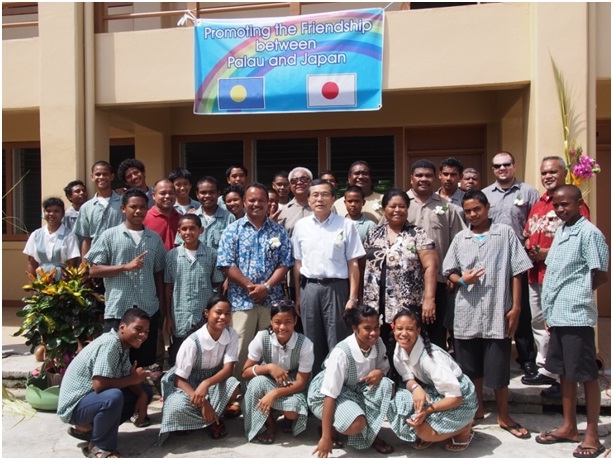
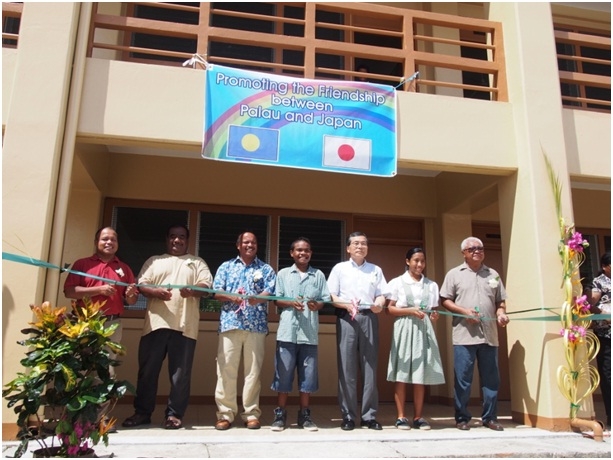
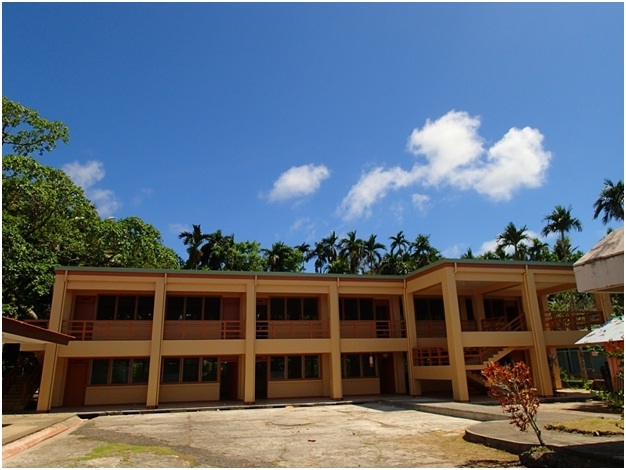
Through Japan’s Grant Assistance for Grassroots Projects (GGP), the reconstruction of the school building was granted to MES in the total cost of $119,706. Through the implementation of this project, the roof was fully renewed; all floor tiles were renewed; and a new staircase was built at the east side of the building.
Among the six classrooms in the two story building, three classrooms were not in use due to deterioration before the project. Nevertheless, through its renovation, students can now utilize six classrooms fully. Furthermore, since students have been using libraries and laboratories as temporary classrooms, the renovated building will allow students to study in a more spacious and comfortable environment. It is also expected that the project will ensure safe studying environment for students at MES.
The Government of Japan launched GGP in 1999, for the purpose of responding to various development needs engaged in grassroots activities in Palau. This is the second GGP implemented in MES, followed by the procurement of fences around the school in 2005. As of May 9, 2014, the Embassy has signed 52 grant contracts with schools and hospitals as well as state governments and non-profit organizations. Education, Health Care and Environment are the primary fields prioritized by Japan and its GGP. For further information about GGP, please contact 488-6455.
The Signing Ceremony
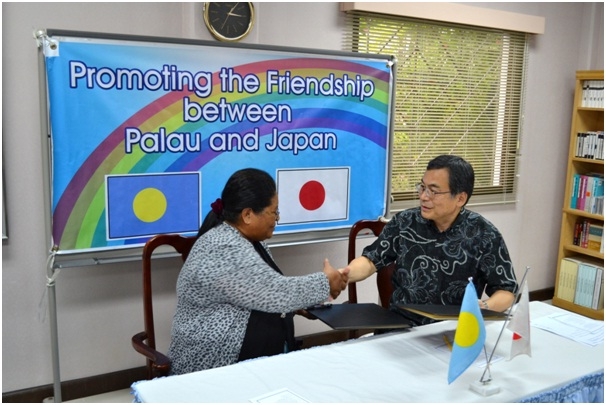
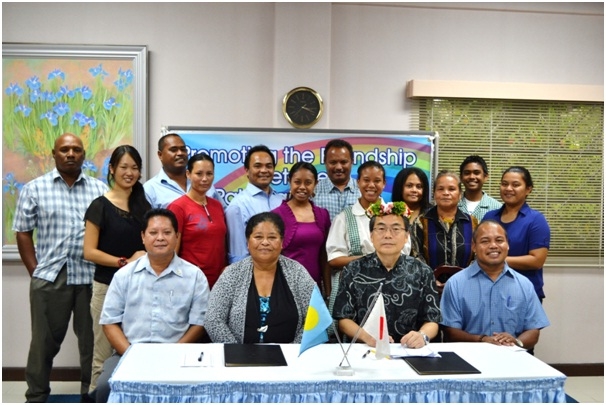
The grant officialized is valued at $ 119,706 and is offered through Japan’s Grant Assistance for Grassroots Projects (GGP). MES is the third biggest public elementary school in Palau. On the contrary to the number of students increasing each year, the school has been facing lack of classrooms, due to some classrooms being out of use. In recent years, the existing two story building at MES was facing issues such as the roof falling apart and tiles coming off the floor which was caused by deterioration. In order to secure students safety, the three classrooms in the second floor of this two story building have been out of use since last autumn.
By implementation of this project; the roof of the two story building will be fully renewed; the tiles of the classrooms will be renewed; and a new staircase will be built at the east side of the building. Through the renovation of the two story building, it is expected that the project will ensure safe studying environment for students at MES.
The Government of Japan launched GGP in 1999, for the purpose of responding to various development needs engaged in grassroots activities in Palau. This will be the second GGP implemented in MES, followed by the procurement of fences around the school in 2005. As of October 8, 2013, the Embassy has signed 47 grant contracts with schools and hospitals as well as state governments and non-profit organizations. Education, Health Care and Environment are the primary fields prioritized by Japan and its GGP.