
Japan-Palau Alumni Series: Vol.34- Mr. Byron M. Silil
2026/5/26
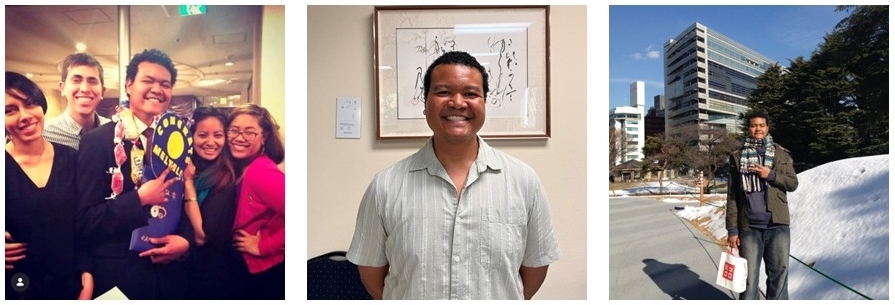
Mr. Byron M. Silil is an alumnus of the MEXT Scholarship Specialized Training College Program. He went to Japan in 2012 and first studied Japanese language at Bunka Institute of Language for one year before he went to study nutrition at Musashino Eiyo Semmon Gakko in Toshima ward. He successfully graduated in March of 2015 with a diploma in nutrition. Mr. Silil, is the son of Mr. Mekreos Silil and Ms. Begonia Tewid from Ngerbeched, Koror. His parents and two younger siblings currently reside in the state of Hawaii.
Mr. Silil studied at Maris Stella School for his primary education and then went to Mindszenty High School. After he graduated from high school, he went on to continue his college education at Palau Community College and graduated in 2012 with an Associate Degree in Environmental Marine Science.
Mr. Silil told us that he was interested in medicine, and that his goal was to become a doctor. His interest in medicine stemmed from his desire to help Palauans improve their daily habits and diets. He observed that these factors contribute to prevalent illnesses in the Palauan community, such as diabetes and heart disease. Before he could begin that journey, he wanted to build his background knowledge, so he chose to study nutrition as part of his specialized college training program. Mr. Silil was interested in medicine, but he was also curious to connect with and learn about Japan and its people.
During Mr. Silil`s first year in Japan he lived in a dormitory while studying the Japanese language at the Bunka Institute of Language. He said that he received strong support from the dorm parents. Students who knew how to communicate in Japanese organized activities to help new students adjust to daily life, and showed them how to go to convenience stores, grocery stores, and restaurants.
Since it was Mr. Silil`s first time living away from home, he also had to learn how to budget his monthly stipend and cook for himself. With support from those around him, adjusting to his new life became a little easier.
When he entered Musashino Eiyo Semmon Gakko (Nutrition College) he stayed in the school dormitory located in Saitama for one year and then moved to an apartment. The commute to his school from Saitama to Ikebukuro was a bit long, but Mr. Silil said he enjoyed it, because he used that travel time in the train to study before and after school. At first, navigating the trains was difficult, he said, because there were not many signs in English at the time. However, with guidance from his teachers and through practice, he gradually became more comfortable using the transportation system.
As for the language, reading and writing were more difficult than speaking. He had to get used to reading the kanji characters. This actually helped him several years later, when he went to study in Taiwan for his Masters. He was able to understand the meaning of the signs in front of buildings because of how much he studied kanji back in Japan.
Outside of school, he enjoyed visiting the parks in Tokyo. His favorite spots were Shinjuku Gyoen and Yoyogi Park. Mr. Silil visited many places, but he said the area where he lived in Tokyo was his favorite. He thinks this may be because he feels nostalgic about the first place he lived at when he first arrived in Japan. He also visited Kamakura, Enoshima, Okinawa, and even the Mt. Fuji area. He was most surprised by the enormous whale shark at the aquarium in Okinawa. One of his regrets is not being able to visit Hokkaido during the snow festival season.
He was also able to participate in a festival that took place in his neighborhood. He had the opportunity to participate in carrying the omikoshi to the temple. It was hard work and his shoulders hurt a bit, but he laughed and said it was all worth it because they were given lunch afterwards. Speaking of food, he tells us that he sometimes “dreams” of tsukemen (dipping noodles), that’s how much he loves the dish. He tried a version of the dish in Hawaii but it didn`t even measure up to the tsukemen that he had back in Japan.
Having lived in Japan for three years, Mr. Silil says that there are some manners that have become his habits naturally such as bowing to everyone he meets including the store cashiers. He does it unintentionally and he finds it funny but it`s just a habit he picked up in Japan. Respecting others was always a part of him growing up in Palau but it`s also very important in the Japanese culture and it`s something he strives to do all the time. He also learned how the Japanese people always have different side dishes during meals and it`s something he does now whenever he cooks for his family. He tries to include a variety of healthy side dishes, including salad and soup.
Mr. Silil still connects with his classmates during his years of studying in Japan on Facebook and Instagram. He returned to Tokyo in 2017 with a friend for vacation. This time they just went around Tokyo, and his favorite memory was visiting team Lab Borderless in Odaiba. He described it as a maze of interactive artwork. At one point, he and his friend decided to split up because there was so much to see. Later, they talked about the rooms each of them experienced. He found it funny that they had each missed some of the rooms the other had mentioned.
After studying in Japan, Mr. Silil attended Seattle University in Washington, where he graduated in 2021 with a Bachelor of Science in Biology. He then continued on to further his education at I-Shou University in Taiwan and graduated in June 2025 with a Doctor of Medicine degree.
After graduating from Taiwan, Mr. Silil spent some time with his family in Hawaii before coming to Palau in 2026, for a 2-4 years internship at Belau National Hospital. Once that is completed he will take an exit exam and if he passes, Mr. Silil will become a General Doctor. He currently has two plans for his specialization: one in cardiology and the other in family medicine with a focus on diabetes. Mr. Silil says that a significant part of his decision on which field to specialize on, will be based on his experience working at the Belau National Hospital and the insights he gains from treating patients there.
His advice to students interested in the scholarship is that learning Japanese is much easier now because of the variety of resources available. You can use your phone to translate or read kanji, and there are many online apps that students can use to study. As long as you have a phone and an internet connection, you can get by and learn a great deal.
Our last question to Mr. Silil was about his thoughts on the relationship between Japan and Palau. He said that the two countries have had a very strong relationship, with Japan providing Palau with a great deal of aid. He hopes that many Palauans will go to Japan to learn, absorb what they can from Japanese culture, technology, and perspectives. Once they return to Palau, they can use that knowledge to help Palau grow to be more independent and to build a more sustainable future for its people.