
Japan-Palau Alumni Series: Vol.32- Ms. Shirley D. Koshiba
2026/3/2
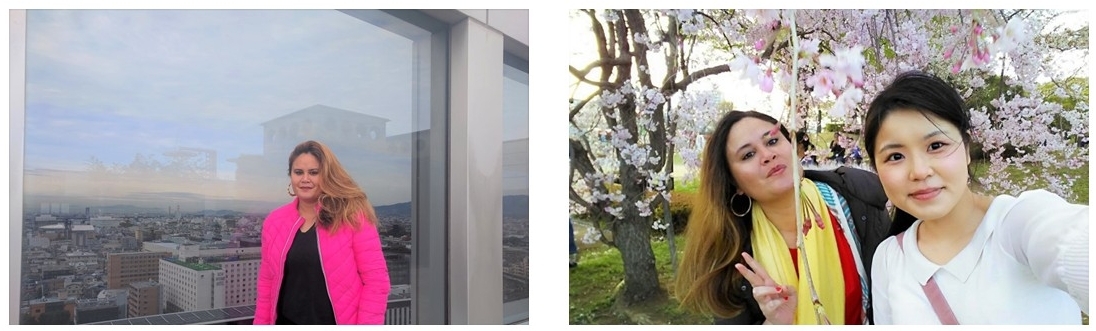
Ms. Shirley Dirreblekuu Koshiba is an alumna of the JICA SDGs Global Leader Program (formerly Pacific-LEADS). She studied at the University of Tsukuba in Ibaraki Prefecture and successfully completed the program, graduating in 2019 earning a Master’s degree in Environmental Science, with a focus on socio-economics.
Ms. Koshiba is the daughter of Mr. Fritz Koshiba and Ms. Martha F. Koshiba. She has three older sisters and one younger brother. Ms. Koshiba is married to Mr. Ryobch Luii and they have a 4-year old son, Kialoi Noah Luii.
Her education began early as a student at Emmaus Kindergarten, then attended Seventh Day Adventist Elementary School and went on to graduate from Palau Mission Academy. She was accepted to study at the University of Hawaii at Manoa and graduated with her Bachelors degree in Political Science.
After graduating, she returned to Palau and began working at the Palau International Coral Reef Center (PICRC) as a Researcher, focusing primarily on the socio-economics of protected areas in Palau. She learned about the Pacific-LEADS program when PICRC and JICA collaborated on a joint project. At the time, the JICA representative was very encouraging and introduced the program to Ms. Koshiba to see if she would be interested in pursuing a Master’s degree through it. Initially, she was somewhat skeptical because she had never stayed in Japan for an extended period. She had traveled there for work-related training but her visits were always short. Ms. Koshiba shared that she had to ask her father for advice, as she was unsure about applying for the program. Her father immediately told her that Japan was an excellent place for learning and encouraged her to at least give it a try. Despite feeling apprehensive at first, Ms. Koshiba now believes that it was ultimately the best decision she could have made.
Ms. Koshiba made her decision and in no time was in Japan at the JICA Center in Okinawa learning the language and the culture of the Japanese people. After a month of learning at the JICA Center, she then moved to Tsukuba and attended the university under the Graduate School of Life and Environmental Sciences.
Her research examined the socio-economic impacts of tourism on Palau’s natural environment. She explained that Palau’s tourism at the time was continuously increasing and there were growing concerns about the environmental pollutants that came with an increase in tourism. She conducted field research at Palau International Airport, surveying departing tourists on their spending, opinions on the environmental tax, and willingness to return if such taxes were increased. Her findings would provide useful information that policymakers and stakeholders would be able to use to strengthen environmental tax policies to limit the impacts on Palau’s environment. Ms. Koshiba said that her professor Mr. Mizunoya was a great help to her. He was very supportive of her project and encouraged her to attend the Japan Section of the Regional Science Association International conference, where she was able to present her thesis. This allowed her to receive valuable feedback to strengthen her research. In addition to participating in the conference, Ms. Koshiba completed a short internship at Okinawa’s Churaumi Aquarium, where she worked closely with researchers studying invasive species, particularly tilapia.
We then asked Ms. Koshiba about her first months in Japan. She shared that although she had a lot to learn, the experience was quite fun, figuring out how to shop at local markets and adjusting to Tsukuba’s cold weather. She also grew fond of Tsukuba, describing it as a hub for science, with around 200 research and scientific institutions, and mentioning that it is a very eco-friendly city.
Aside from her academic experiences, she had the opportunity to travel within Japan. She excitedly recalled visiting Sapporo in Hokkaido Prefecture for New Years. Her acquaintances in Japan often praised Hokkaido for its seafood, milk, and butter, among other specialties, which inspired her to experience it for herself. She also enjoyed going to hanami with her friends and trying different Japanese foods. At first, she was hesitant to try sukiyaki because of the raw egg, but it has since become one of her favorite Japanese dishes. She even tried horse meat sashimi. Although she was nervous, her teacher recommended it, so she gathered the courage to taste it, and found it really good.
Ms. Koshiba has not yet returned to Japan since going back to Palau, but she hopes to visit someday, especially now that direct flights are available. After completing her studies, she resumed her work at PICRC, where she presented her research findings to various stakeholders and continued working for two more years. She currently works as a National Coordinator for The Global Environment Facility a small grants program at the United Nations Development Programme’s Palau Office.
At the end of our interview, we asked Ms. Koshiba to reflect on her overall experience. She described life in Japan as “peaceful, organized, and convenient,” noting that everything, from transportation to bill payments, was efficient. Although adjusting required effort, she encourages other Palauan students who may feel hesitant to at least try, as she believes it is a truly valuable experience.
When asked about the relationship between the two countries, Ms. Koshiba said that Japan has supported Palau in many ways, particularly through ODA programs. She hopes to see more young Palauans take advantage of educational opportunities such as Pacific-LEADS and MEXT. She added that since Japan is one of Palau’s closest partners, it is important for Palauans to understand Japan as well as they do other countries.